Interdisciplinary Collaboration
The Architecture of the Trap Project
JoAnn Stevelos · Sarah Blesener
Exhibit
An interdisciplinary collaboration with photojournalist Sarah Blesener exploring family archives, memory, complicity, and the ethics of looking. What happens when an inherited archive begins to reveal truths its maker worked to conceal?
Our work begins with my mother’s photographs. She documented holidays, sacraments, and vacations during the years a Catholic priest was abusing her children. The albums preserved the appearance of a happy family. Together, Sarah and I examine what those photographs show, what they leave out, and how I might reclaim the telling of my own life.
After nearly two years of work, several artist residencies, and countless conversations, our collaboration is featured at the 2026 ZOOM Photo Festival in Saguenay, Quebec, October 7–November 1.
The exhibition also examines how journalists work with survivors of sexual violence. How do you enter someone’s life, earn their trust, and eventually leave? Who decides what is shown? What does the person sharing their history retain control over, both during the reporting and after publication?
Sarah is a photojournalist and a survivor. I am a writer and a survivor. Those experiences shape our decisions about the photographs, the writing, and the captions. Over time, we became collaborators and friends, and our relationship became part of the work itself.
At the festival, Sarah has been sharing the project through talks and student workshops. She has described visitors spending time with the photographs and being deeply moved by them. We worked carefully on the captions, which ask viewers to consider how the images were made, whose account they preserve, and what it means to look at them now.
We are also working with Spain-based graphic designer Serena Gramaglia on our first zine, bringing the photographs and writing together in a form we can share more widely.
Our hope is that this work helps journalists listen more carefully and gives survivors greater confidence that they can share their stories while retaining authority over how those stories are told.
Learn more about the 2026 ZOOM Photo Festival →
A Process of Inquiry
Working across photography, memoir, interviews, performance, and visual experimentation, The Architecture of the Trap Project is a collaboration between writer JoAnn Stevelos and photographer Sarah Blesener.
Rather than presenting a finished narrative, the project is built around a process of inquiry. Its architecture is composed of several interwoven threads that continually inform one another.
The collaboration is not simply a means of making the project.
It is one of its primary subjects.
Interwoven Threads
At the center of the project is the relationship between JoAnn and Sarah. Their conversations, questions, disagreements, discoveries, and shared acts of looking become part of the work itself.
The Archive
Reworking the Archive
Public Witness
Multiple Forms of Storytelling
The project braids together:
The Physical Form of the Work
The physical form of the project reflects its conceptual architecture — different materials marking different registers of memory, evidence, and witness.
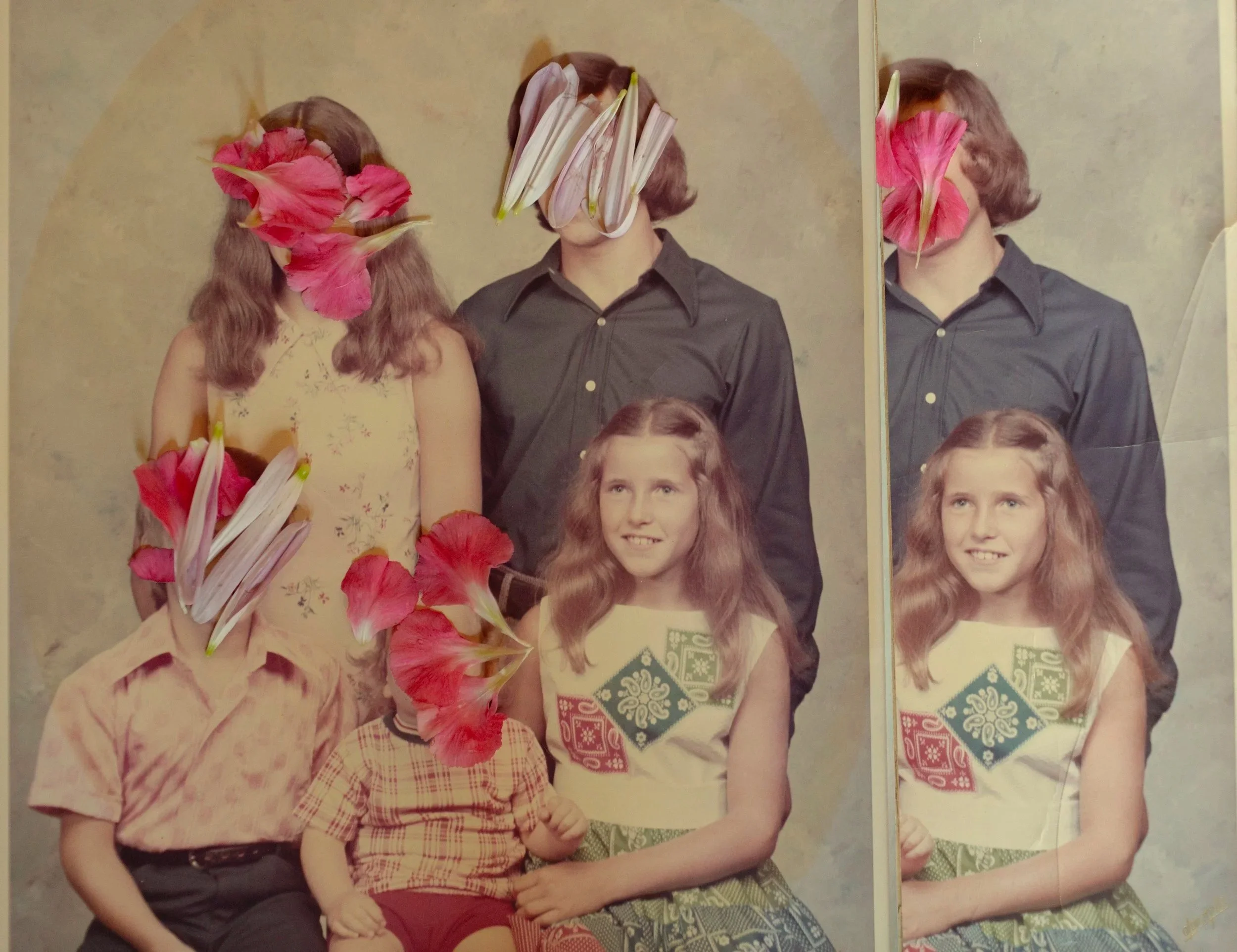
Photo by Sarah Blesener