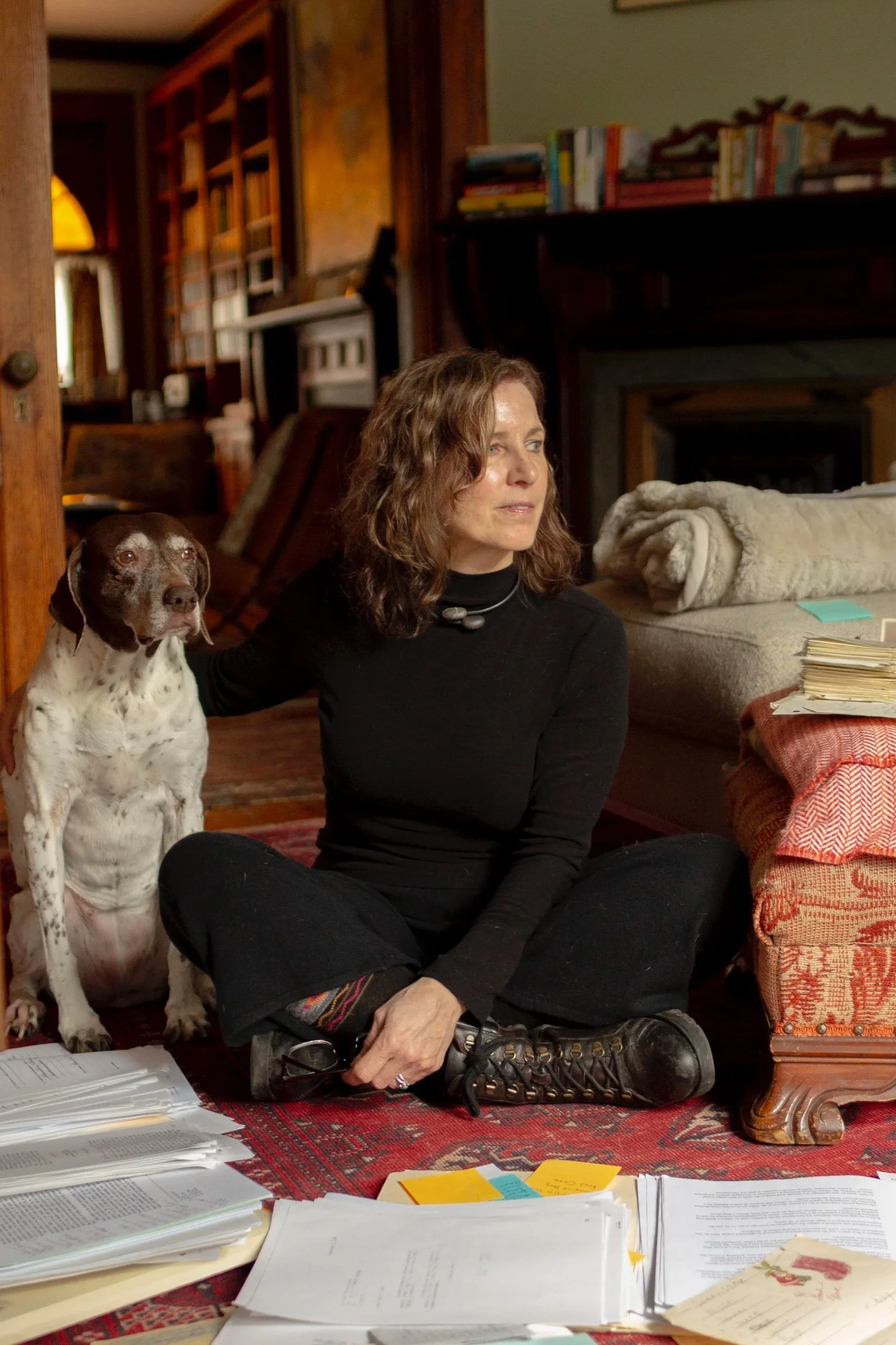
JoAnn Stevelos, MS, MPH
Public Health Strategist | Writer | Advisor
I work at the intersection of public health, philanthropy, and storytelling, helping institutions and communities address complex challenges through partnership and trust. Through my consulting practice, JSC, LLC, I advise organizations working on issues such as trauma-informed systems, child sexual abuse prevention, survivor-centered leadership, and community health.
For more than two decades, I have worked with nonprofits, foundations, universities, and public institutions to develop strategy, build partnerships, write proposals, evaluate impact, and design initiatives that center lived experience. Much of my work sits between institutions and communities—translating resources, knowledge, and relationships into approaches grounded in trust and collaboration.
My approach is relational and narrative-driven. Whether working on policy initiatives, leadership training, or program development, I focus on helping organizations listen carefully to the people most affected by the challenges they seek to address.
I choose my partnerships carefully, working each year with a small number of organizations whose missions reflect what I believe matters most: compassion, fairness, dignity, and repair. The principle guiding this work is simple: meaningful change happens when we move at the speed of trust.
My work has taken me from trauma-informed workshops in New Zealand to arbovirology laboratories in Colombia, from memoir research in Albania to program development conversations in Estonia. The through-line across these experiences is a commitment to understanding how people and institutions respond to harm—and what it takes to rebuild trust afterward.
Alongside my professional work, I write essays, memoir, fiction, and plays that explore memory, survival, and the ways silence is often mistaken for healing.
I studied at Columbia University, the University at Albany School of Public Health, and Albany Medical College, where my work focused on public health and bioethics.
How I Approach Building Proposals and Partnerships With Communities
Every strong proposal begins with a promise—not just of funding, but of trust. Of listening closely. Of honoring what communities already know and do. My role is not to overwrite that knowledge, but to help translate it into language funders can understand without losing what makes it alive.
This story reflects how I work: relationally, strategically, and with deep respect for those closest to the issue. Whether the proposal is about child safety, health equity, or trauma-informed systems change, I begin with the same question:
What promise are we making and how do we build a structure strong enough to hold it?
This particular collaboration began, as many do, not with a deadline but with a conversation. A shared recognition that something urgent and meaningful was already happening and that the right kind of support could help it grow.
In this case, the promise was to a community with a devastating history of child sexual abuse. We weren’t simply applying for a grant. We were committing to do the work differently.
The spirit behind the Robert Wood Johnson Foundation proposal was part dream, part logistics, part late-night coordination across time zones. Working across hemispheres meant someone was always groggy. Someone was always writing emails in the margins of an already full day. Someone—often me—was stitching it all together with urgency, grace, and caffeine.
The stakes were high, not because we needed a win, but because we had made a quiet commitment: this time, the community would not be an afterthought. We were not building something for them. We were building it with them, and, in many ways, under their direction.
We became the kind of team that knows when to press and when to wait, when to soften an email and when to escalate. We learned to move between funder-speak, academic language, survivor-led work, and the cultural frameworks guiding the community itself. The proposal began to take shape draft by draft—structured by hope, urgency, and the honest constraints of the work.
We weren’t simply asking for support. We were trying to reframe the problem. This was not about trauma as a metric. It was about colonization, cultural wisdom, and the long arc of relational healing.
That meant letting go of control. That meant letting the community lead.
Slowly, something steadier began to take shape—pushing forward through the small openings available to it, reaching toward light wherever it could find it.
The scaffolding for the project came from the community itself, captured in a Samoan proverb often repeated by our local partners:
“O le fofo e sili mo le tiga o le alalafaga, o le alalafaga lava ia.”
The best solutions to the pain of a community come from the community itself.
My role in the collaboration was to help hold the structure together—developing the strategy, building the partnerships, and translating the community’s vision into language funders could recognize and support.
The first story I remember writing was about a group of girls deciding who would go first. I didn’t realize it then, but I was already circling the questions that would follow me into adulthood: Who decides? Who gets heard? How do we bring everyone in?
That instinct—to shape chaos into something understandable—never left me. Writing became a way to survive, then a way to witness, and eventually a way to return. I have written through trauma, policy, research, grief, and memory. Each piece answers a quiet question beneath the work: Now that you know, what will you do with it?
My creative work spans memoir, fiction, poetry, and performance. Across forms, I explore survival, maternal complicity, spiritual terror, and the possibility of repair.
My memoir-in-progress, Leaving the Secret World, weaves personal narrative with public health work, cultural history, and the slow construction of hope.
My novel in progress, Everything We Said, follows four Albanian-Welsh siblings from childhood through decades of silence and into the room where they finally speak the truth the adults around them refused to hold.
Dream Alibis, a cross-genre collection of poems, flash fiction, and a short play, explores the ways memory bends under pressure—how imagination becomes both refuge and confession.
My play Little Red Wagon centers on a family navigating the aftermath of a political activist’s suicide, bound together by grief and silence. The play was produced on Purple Radio and staged at the University Club of Albany.
Other dramatic works include We Are at the Well and Waller, which explore maternal complicity and relational survival in the aftermath of spiritual and emotional harm.
My short story “Second, You Are Really Nigerian” appeared in Arts & Understanding Literary Magazine, received an Honorable Mention from both the Glimmer Train competition and the Hudson Valley Writers Guild, and was later adapted into a one-act play performed by The Wit and Will Theater Company.
My essays have appeared in The Guardian, Chicago Story Press, P.S. I Love You, DewDrop, Arts & Understanding, and The Writer.
My essay “How Do You Forgive the Unforgivable?” was nominated for both a Pushcart Prize and Best American Essays in 2025.
Another essay, “This Is About My Mother,” published in The Guardian, examines silence, complicity, and the limits of maternal love.
My essay “Mugwort” received distinction in the 2025 Writer’s Digest Personal Essay Awards.
“The Archivist,” created in collaboration with photographer Sarah Blesener, is forthcoming in North American Review.
I also write two Substack newsletters:
The Second Silence, which explores cultural critique and survivorship, and Dream Alibis, a cross-genre space for poetry, photography, dream, and memory.
Much of my writing is shaped by my parallel life in public health. For more than two decades I have worked at the intersection of trauma recovery, children’s wellbeing, and systems change. That work continues to inform how I write and what questions I follow.
I return again and again to the same questions:
Who is at the table, and who is not?
When should I speak, and when should I listen?
How do we enter a space with humility?
When is it time to lead, and when is it time to step aside?
Writing rarely offers answers.
It sharpens the questions.
In the Dream House
Created by Sarah Blesener and JoAnn Stevelos
In the Dream House is a collaborative, interdisciplinary project investigating how we engage with visual archives through a trauma-informed lens, aiming to make visible the absences that have been excluded from historical narratives and, in doing so, create opportunities for recovery, reworking, and reimagining the stories we tell. This work is interested in the gaps, silences, absences and redactions that often permeate archives, especially in the context of traumatic histories and survivor testimonies. How can we bridge the boundaries between private and public memory in mourning and grief? How can participatory visual storytelling practices be integrated into recovery? By reimagining how we work with our personal and collective archives, we create a space where healing becomes a shared responsibility—one that embraces creativity, compassion, and mutual support.
This project explores how archives—both personal and collective—can support survivors of trauma by reactivating them through sensory memory and creative interventions such as the use of flowers, heirlooms, and memorabilia. Rather than focusing on erasure, we aim to work with archives in ways that honor the experiences of survivors while fostering recovery and growth. We are interested in integrating participatory methodology and therapeutic techniques, focusing on care-driven, rather than state-driven, methods to transform trauma into creative spaces for creativity and healing.
This project asks a radical question: What do we do with the personal archives of trauma survivors—especially when those archives were curated by the very people who caused harm? Co-created by writer and public health advocate JoAnn Stevelos and documentary photographer Sarah Blesener (www.sarahblesener.com), What Do We Do With the Photos of Monsters? centers around a collection of family photo albums that depict a smiling priest, a complicit mother, and children performing normalcy under threat. These aren’t just photographs—they’re instruments of forgetting, built to obscure what they also record. Rather than destroy them, this work reclaims the archive as a site of authorship. Through visual redaction, annotation, and re-framing, it turns passive documentation into active survival. The project becomes both a question and a method: Can a photograph be repossessed? Can survivors transform the record of their own erasure into a map of survival? This is not revenge. It’s not nostalgia. It’s a practice of truth-telling, one that refuses to let the monsters keep the frame.
I am a public health strategist, philanthropic advisor, and executive leader with more than two decades of experience designing and advancing initiatives that improve the health and wellbeing of children, families, and communities. My work spans philanthropy, government, academia, and nonprofit leadership, and is grounded in a simple belief: the most durable solutions emerge when institutions listen closely to communities and invest in the leadership that already exists within them.
Across my career I have led and supported multi-year, multimillion-dollar initiatives addressing childhood health, serious illness, infectious disease, and child protection. I specialize in building cross-sector strategies that integrate research, ethics, and lived experience into public health practice, translating community priorities into programs and partnerships that can scale.
My work often sits at the intersection of philanthropy and systems change. I have developed strategies, built partnerships, and structured proposals for foundations, academic institutions, and global health organizations working to advance health equity. Through both institutional leadership roles and my consulting practice, I have helped organizations move from promising ideas to fundable, implementable initiatives.
As a leader, I practice an equity-centered, trust-based approach shaped by the belief that institutions move at the speed of trust. Influenced by thinkers such as Paul Farmer and Gail Christopher, I prioritize community-led solutions, relational leadership, and the redistribution of voice and decision-making power within complex systems.
I also advise executive teams and boards on strategy, partnerships, and philanthropic engagement, helping organizations navigate the intersection of mission, funding, and public narrative. My work has included collaboration with global health initiatives, philanthropic networks, and mission-aligned partners working to accelerate social progress.
Alongside my leadership work, I maintain an active creative practice. My essays, memoir, fiction, and plays explore themes of survival, maternal complicity, memory, and repair—examining how silence is often mistaken for healing and what it takes for truth to emerge.
My creative work has been staged, broadcast, and widely published, with essays appearing in The Guardian, Chicago Story Press, and other publications. My essay How Do You Forgive the Unforgivable? was nominated for both the Pushcart Prize and Best American Essays. I have developed work through residencies at Arts Letters & Numbers, The Church, PS21, and the Roxbury Writing Residency, and have collaborated with artists including photographer Sarah Blesener on projects exploring archives, memory, and survivor authorship.
My parallel creative and public health practices inform one another. In both spaces I return to the same questions: Who is heard? Who is left out? How do institutions repair harm and rebuild trust?
Through my consulting practice, JSC, LLC, I work with a small number of organizations each year on strategy, narrative development, proposal design, and trauma-informed program development. I choose these partnerships carefully, focusing on organizations whose work reflects values of compassion, fairness, dignity, and repair.
I hold degrees from Columbia University (BA), SUNY Albany (MPH), and Albany Medical College (MS in Bioethics).
Philanthropic Strategy & Grantmaking
Public Health Strategy & Global Children’s Health
Strategic Partnerships & Ecosystem Development
Program Design, Evaluation & Applied Research
Equity-Centered Leadership & Community-Led Solutions
Trauma-Informed Systems & Survivor-Centered Design
Narrative Strategy & Thought Leadership
Cross-Sector Collaboration & Ethical Innovation
MPH, Social Behavior and Community Health
School of Public Health, SUNY Albany
MS, Bioethics
Alden March Bioethics Institute, Albany Medical College
BA, Liberal Arts
Columbia University, New York
Child Protection: Children's Rights in Theory and Practice |Harvard ED-X |2026
200-Hour Yoga Teacher Certification | Yoga Alliance | 2025
Trauma-Sensitive Mindfulness | 2025 | Thelean Institute
From Laboratory to Market |Harvard ED-X: | 2024
Mastering the Treatment of Trauma | NICABM | 2024
Working with the Pain of Abandonment | NICABM | 2023
End of Life Doula Training | INELDA | 2022
Mindfulness for Life and Work | NICABM | 2021
Contemplative Therapies & Resilience Building | Embodied Philosophy | 2020
Board Member, The Hope Institute
Board Member, Eat REAL
Board Member, New York State Public Health Association
Committee Member, International Society of Child Abuse Prevention
Advisory Board Member, Obesity Action Coalition – Childhood Obesity Division
Member, American Public Health Association
Member, American Society for Bioethics and Humanities – Pediatric Ethics Alliance
Leaving the Secret World | Memoir (80,000 Words)
A hybrid memoir exploring survival, maternal complicity, and institutional silence, weaving personal narrative with public health work on trauma recovery, community leadership, and the slow construction of hope.
Everything We Said | Novel (100,000 Words)
A literary novel following four Albanian-Welsh siblings across decades of silence as they confront the truth about their childhood and the family structures that sustained it.
Dangerous Situations | Chapbook
Architecture of the Trap | Art Book
The Dream House | Archival Workshop
The Second Silence | SubStack Newsletter | 2025
Long-form essays examining survivorship, institutional silence, cultural critique, and the complex work of repair after trauma.
Dream Alibis | SubStack Newsletter | 2025
A hybrid creative journal combining poetry, dream writing, photography, and short reflections on memory, survival, and the imagination.
The Archivist | North American Review | Spring 2026
The Daughter Ship | North American Review | Book Review of The Daughter Ship by Boo Trundle | Spring 2026
Mugwort | The Writer | forthcoming Spring 2026
This Is About My Mother | The Guardian | 2025
How Do You Forgive the Unforgivable? | Chicago Story Press | Nominated for the Pushcart Prize & Best American Essays | 2025
Passersby | DewDrop | 2024
The Alaei Brothers | Arts & Understanding Literary Magazine | 2020
No Syrup, Just Butter | P.S. I Love You | 2018
Howard Be Thy Name | Novel | 2017
Dream Alibis | Anthology of Poetry & Plays | 2017
A Voice of My Own | The Writer | 2017
Second, You’re Really Nigerian | Arts & Understanding Literary Magazine | 2014
Honorable Mention Glimmer Train & Hudson Valley Writers Guild
Little Red Wagon
Little Red Wagon
Radio Reading | Purple House Radio | 2017
Staged Reading | University Club of Albany | 2017
We Are at the Well
Full Production | Wit and Will Theater | 2008
New York State Poetry Workshop | Gary Maggio
New York State Writers Institute
Short Fiction Workshop | Lydia Davis
Fiction Workshop | James Lasdun
Troy Arts Center
Poetry Workshop | Victorio Reyes
Fiction Workshop | Lucia Nevai
Columbia University
Writing for Television | Frank Pugliese
Arts Letters & Numbers Residency | with Sarah Blesener
The Church Residency & Performance | with Ryder Cooley
PS21 Residency & Performance | with JD Urban
Roxbury Writing Residency | with Annie DeWitt